Iran’s New Era: Mojtaba Khamenei Named Supreme Leader

Iran is currently undergoing an unprecedented leadership transition following the reported assassination of Supreme Leader Ayatollah Ali Khamenei on 28 February 2026, during military strikes by Israel and the United States.
Immediate Transition: Interim Leadership Council
Following Article 111 of the Iranian Constitution, a Provisional (Interim) Leadership Council was established on 1 March 2026, to manage the country’s affairs until a permanent successor is elected.
The Council Members are :
- Masoud Pezeshkian : President of Iran (since July 2024).
- Gholam-Hossein Mohseni-Eje’i : Chief Justice of Iran.
- Alireza Arafi : Member of the Guardian Council and deputy chairman of the Assembly of Experts.
This council carries out the duties of the Supreme Leader temporarily. While some reports included Speaker of Parliament Mohammad Bagher Ghalibaf, others indicate a “group of three” is leading.
Potential Permanent Successors
The Assembly of Experts is constitutionally mandated to select the next permanent leader. Key figures currently under consideration include:
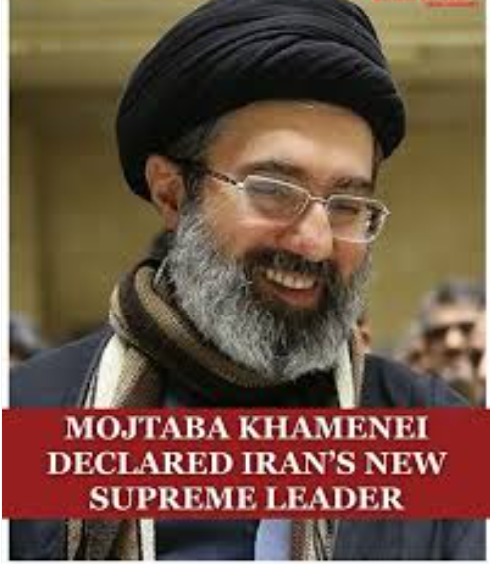
Mojtaba Khamenei : The late Supreme Leader’s son, who has seen an increased public profile.
Ali Larijani : Former Speaker of Parliament and recently appointed head of the Supreme National Security Council; reportedly designated as an “acting” leader prior to the assassination.
Hassan Khomeini : Grandson of the Islamic Republic’s founder, Ruhollah Khomeini.
Gholam-Hossein Mohseni-Eje’i : Currently serving on the interim council and a high-ranking judiciary official.
Current Context and Challenges
Reports indicate that about 40 senior regime members were killed alongside Khamenei, creating a massive power vacuum in both political and military wings.
The transition occurs amidst severe domestic instability, including large-scale protests in early 2026 that were met with a violent state crackdown.
While the U.S. and Israel have indicated “regime change” as a goal, analysts suggest the Islamic Republic’s structure, particularly the IRGC, may attempt to consolidate power quickly to ensure institutional survival.